

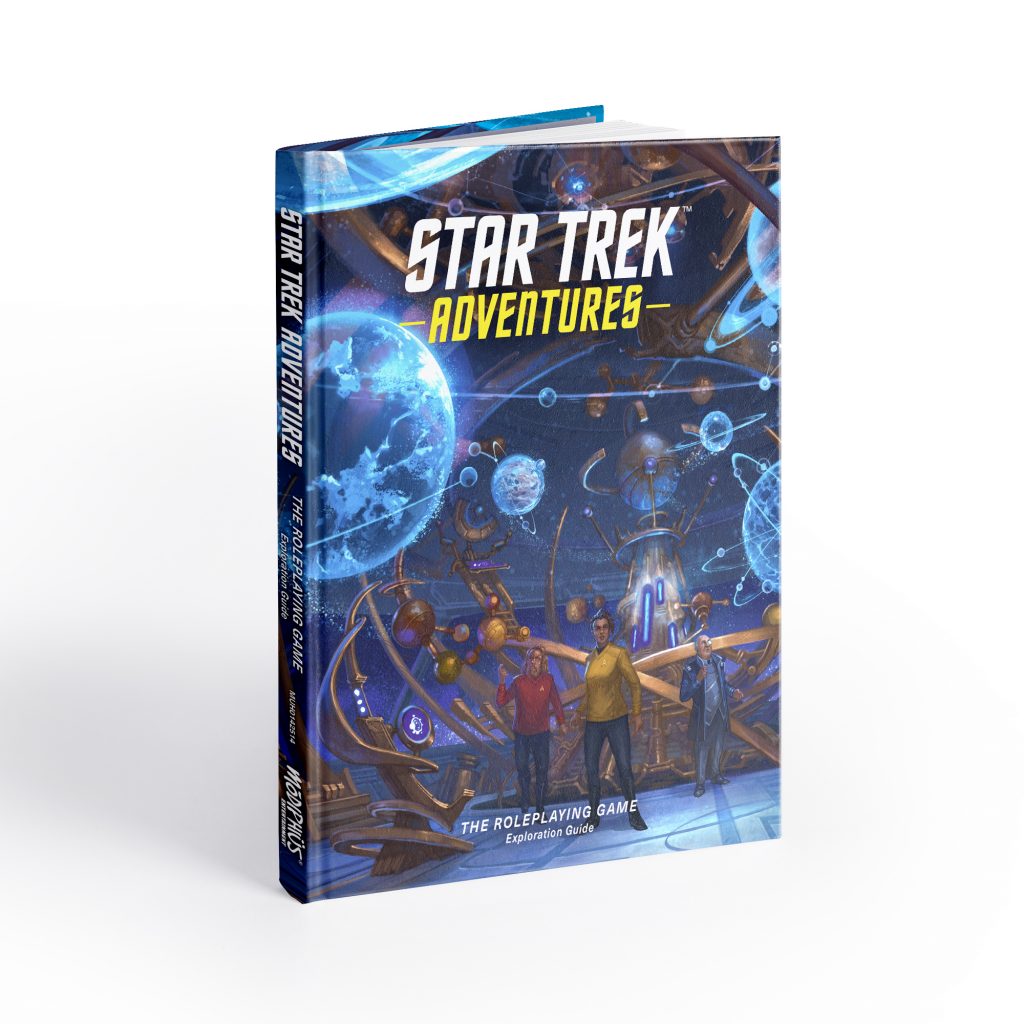
Hot on the heels of the Technical Manual, which was available in PDF format back in March, but only launched this month in print. Modiphius has another supplement for Star Trek Adventures game masters and players to feast upon. Today, we’re looking at the Star Trek Adventures 2E Exploration Guide. This time, we’re taking a deep dive into another core component of Star Trek as a franchise, and of Starfleet as an institution. Exploration.
The core rulebook has a section on Star Trek: Strange New Worlds. This includes an overview of the planet classifications. While also giving the game master some fun anomaly ideas. Then we had the technical manual, which took a deep dive into what you could explore with. But the core idea of exploration? That’s not had a great deal of content coverage so far.
🖖 Keep Reading! We’re doing a Giveaway of the Star Trek Adventures 2E Exploration Guide in this article, thanks to Modiphius!
That makes this an exploration guide. Giving game masters the building blocks to create not only settings but also stories centred on exploration is an absolute no-brainer for any Star Trek Adventures group that plays regularly.
🔷 Purchase the Star Trek Adventures 2E Exploration Guide
A Book for Game Masters
This section of my review typically provides an overview of what Star Trek Adventures is. If you’ve been recommended this review and are not familiar with the game. The short version is that it’s a tabletop RPG (think Star Trek D&D). For the long version, I’d recommend checking out our review of the Star Trek Adventures 2E Core Rulebook.
This new supplement comprises 142 pages (excluding the contents and tables). Only the first chapter (pages 7-22) focuses on introducing new mechanics and possibilities for the player. There are a lot of fun options here (like mechanics to support adding an officer exchange character to your game). But if you’re not a Game Master and have no intention of being one in the future. You would be far better off picking up the Technical Manual if you were having to make a choice.
If you are a game master, though, this book is a must-have. Especially for those of us (like myself) who struggle to create something from scratch. Preferring to instead have a base idea to shape and mould into something more definitive.
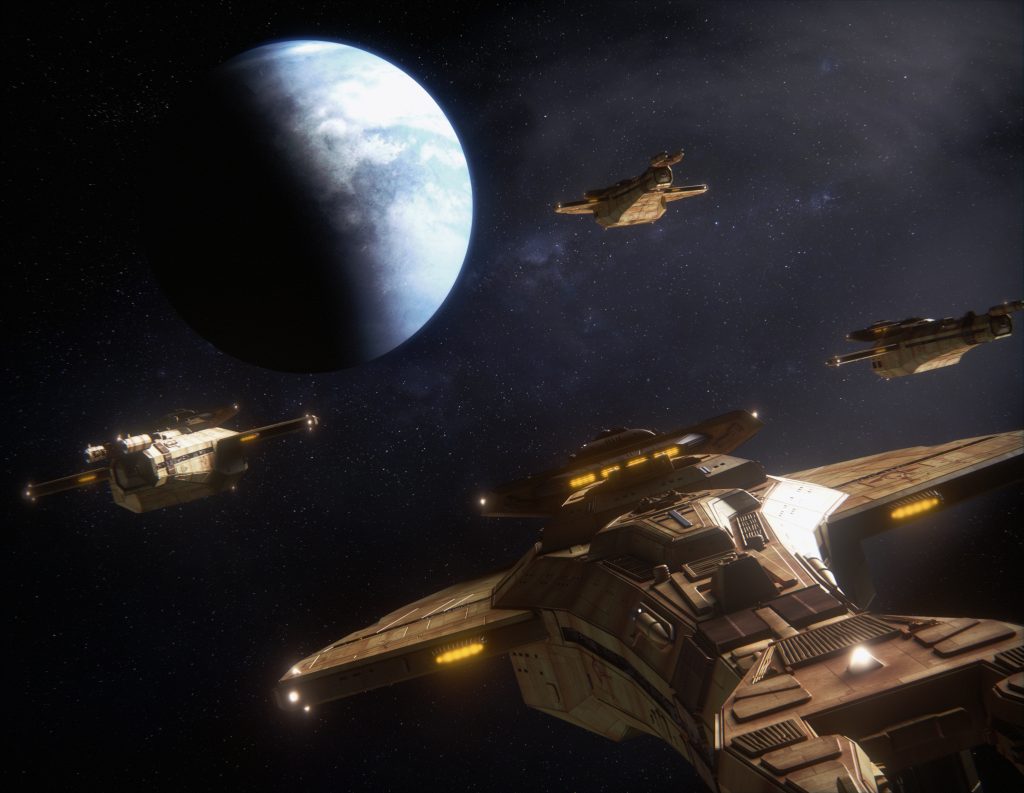
Building a World
Star Trek is an expansive universe, with an overwhelming number of possibilities. The exploration guide recognises that and in its structure alone helps you to narrow down the scope of your game to make your intended story and world manageable.
We start off not with universes, galaxies or quadrants. But with sectors. After all, if you want a galaxy far, far away… Why are you planning a Star Trek campaign? This section helps you establish the foundation of the sandbox that your players will interact with. How many notable systems are there in the world? What sort of spatial phenomena are present that your players may run into?
This section (on page 25) includes a very useful 14-step guide for sector creation, with page numbers provided for each step to facilitate easy reference to the more detailed explanations throughout the book. However, if you prefer to wing it and use the brief descriptions for each step, you can. That’s one of the big perks of tabletop gaming. The only constraint is your imagination (and player schedules of course).
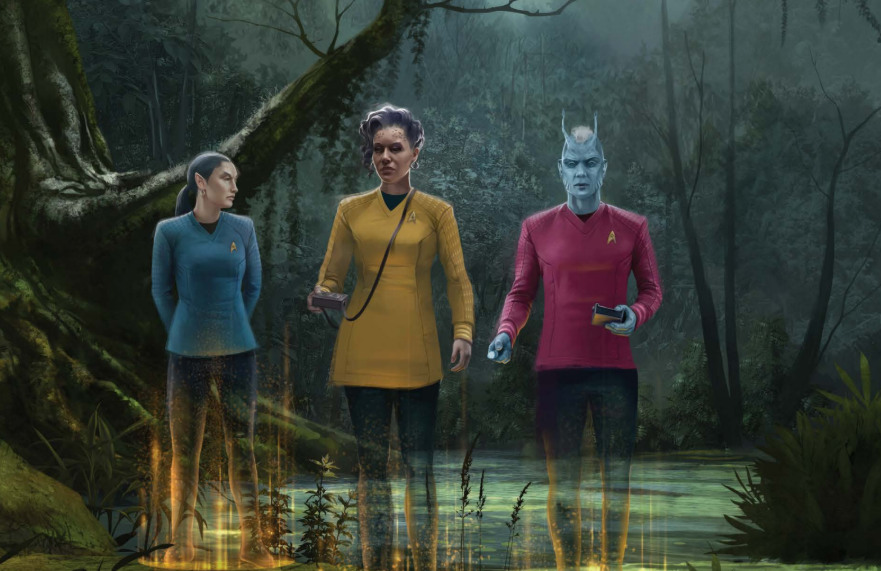
Detail At Your Discretion
I just alluded to a fantastic aspect of this supplement above. But I felt it deserved further discussion to really highlight how useful a supplement like this is for game masters. When creating my own games, I’ve regularly found myself with writers block when designing an environment or scenario. Or having to hastily improvise on the spot when a player poses a novel question I hadn’t prepared for.
A supplement like this is a handy fallback in any of these situations. While you can (and I encourage) using your imagination as much as possible. When you really hit a dead end and need just a drop of inspiration, the exploration guide is there. Ready, and waiting. You can tell it’s been written by people that play the game!
In this sector chapter alone, you’re encouraged not just to think about planets, anomalies and systems. But also about how these systems are positioned in relation to each other, and even stellar density! A consideration that could be very handy if you need to introduce a complication in a story while a player is trying to pull off a maneuver, or escape a situation at warp speed.
Stars and Systems
After your basic sector characteristics are established. The exploration guide takes you onward to defining the systems within it, and their stars. Without even touching the planets (they’re next), the book prompts you to think about the details of your world. While teaching you a bit about astronomy (no, not astrology) in the process!
This isn’t just a whistle stop tour describing in a roundabout way that you should decide whether you have single, binary or even tertiary star systems. The book covers the types of stars (using real-world scientific terminology and fun facts). Their luminosity and their rarity.
However, let’s bring us back to the clearly significant amount of research that has gone into the supplement. The book also provides useful rolling tables to help you decide how all of this scientific minutia is applied to the world that you’re building.
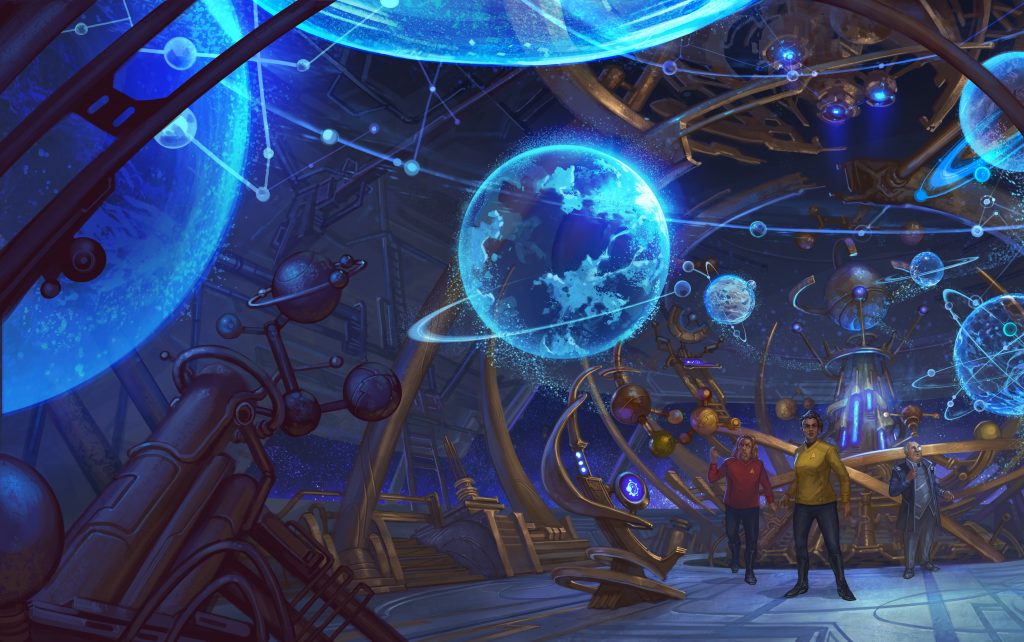
Planets
Chapters 4 and 5 concentrate on the planets, and perhaps unsurprisingly, they are the most comprehensive parts of the exploration guide. With Chapter 5 starting on page 49, and filling out the rest of the book with its coverage of the various planetary biomes you can drop your players into.
Chapter 4 acts as an extension of the planetary classification details provided in the core rulebook. Providing guidance on how and where to place these planets within your system in relation to each other. We are once again treated to a series of handy rolling tables that can be used either by the game master creating the world prior to a session or by players during a session. Or if you’re brave, with game master guidance during play!
We also receive details on how to define and decide aspects such as mass and size. Paving a path for you to be able to rattle off a comprehensive description when your science officer player asks for the result of their sensor scan!
Biomes
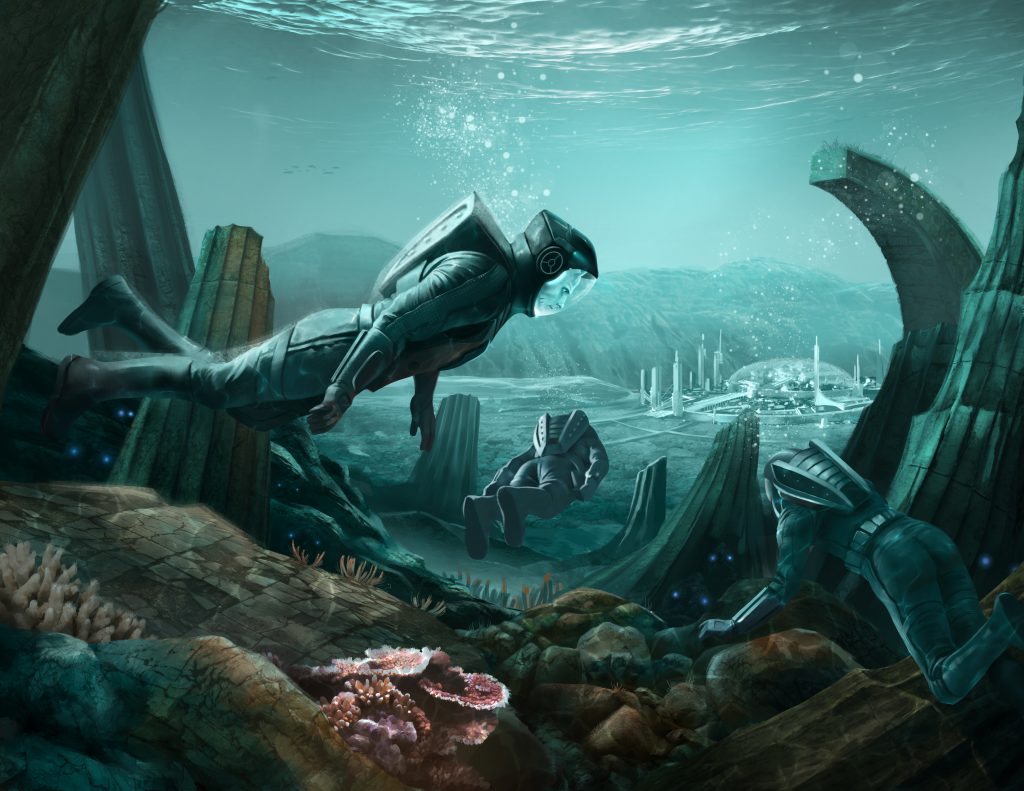
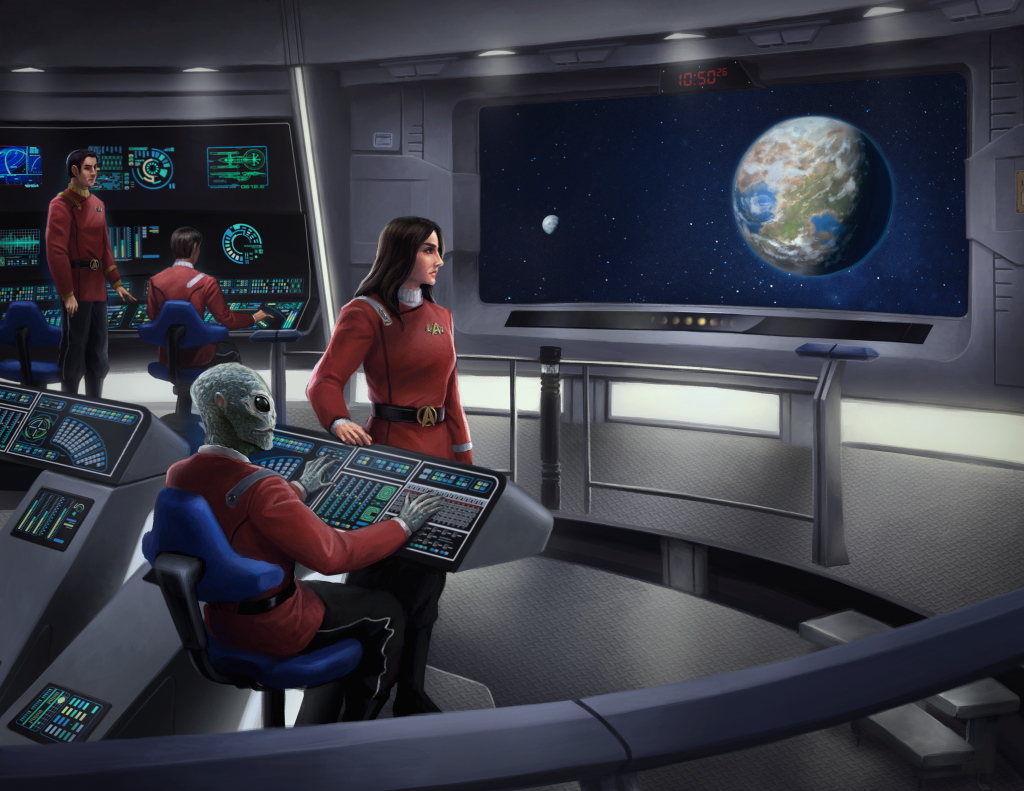
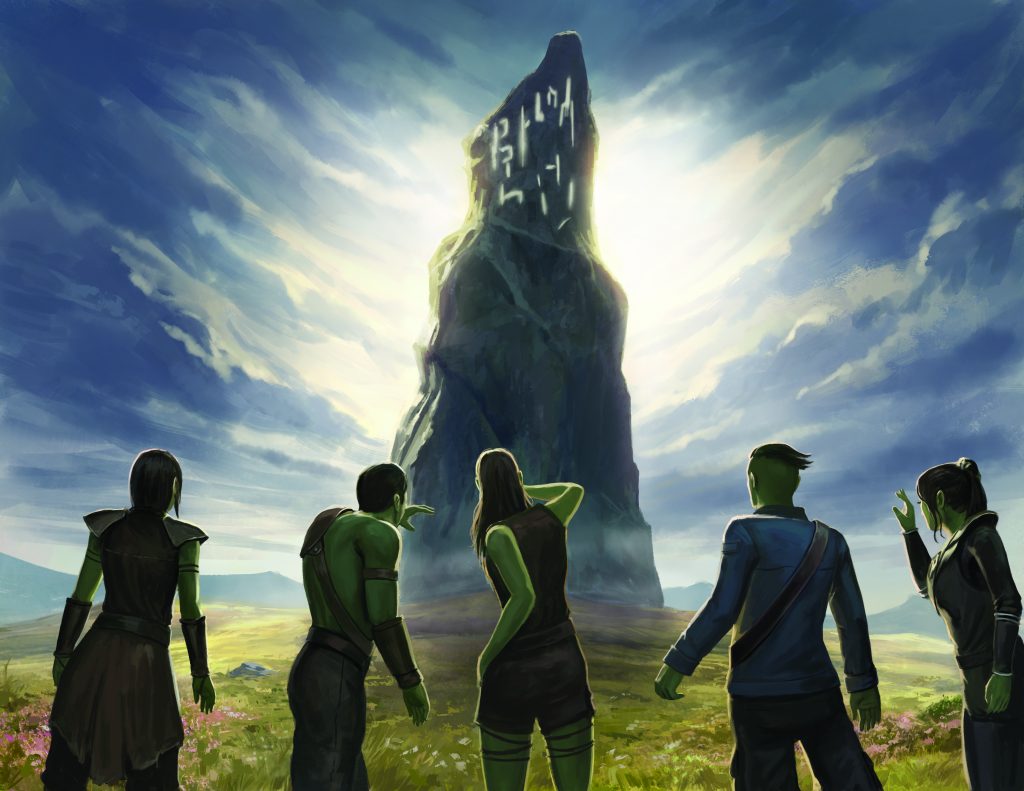
What Star Trek book about exploration would be complete without a few pages about caves? The guide certainly doesn’t disappoint in this respect, with 11 pages dedicated to Star Trek’s favourite planetary setting. These sub-chapters within the book also feature a handy ‘recommended viewing’ section, listing episodes that take place in the associated biomes. If you’re really stuck for story inspiration, or just fancy a ‘Star Trek Caves’ viewing party.
Also included in these chapters are story generation rolling tables. As well as advantage and complication rolling tables to help you generate scenarios on the fly as your players put you on the spot.
As with our space-focused chapters, it’s clear that Modiphius has performed extensive real-world research to inform the content of this guide. But do keep in mind that it is still a guide to the Star Trek Universe. So, I wouldn’t rely on it too heavily when engaging in a spirited debate with a real-world astronomer or geologist.
Artwork
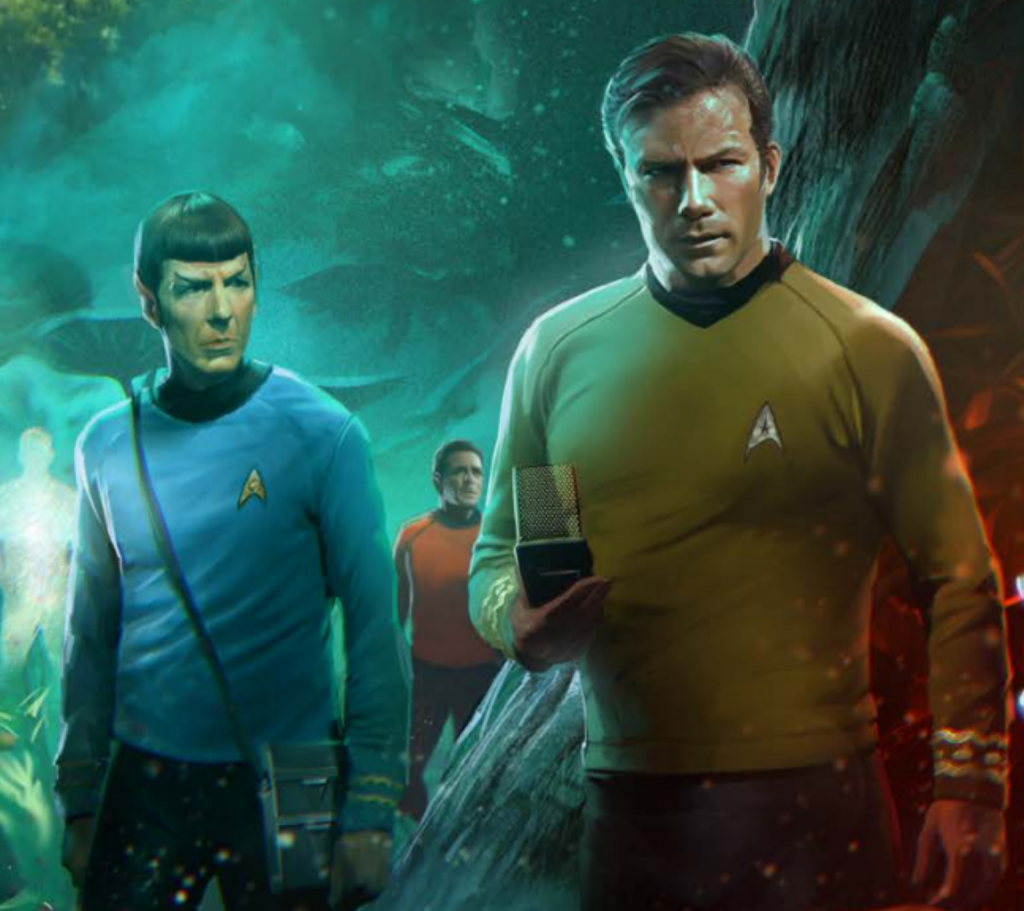
If you’ve read my review of the 2E Core Rulebook. You will already know that one of the reasons I enjoy Star Trek Adventures content so much is the variety of artwork. Despite the occasional commbadge misplacement or anachronous mismatch of technology.
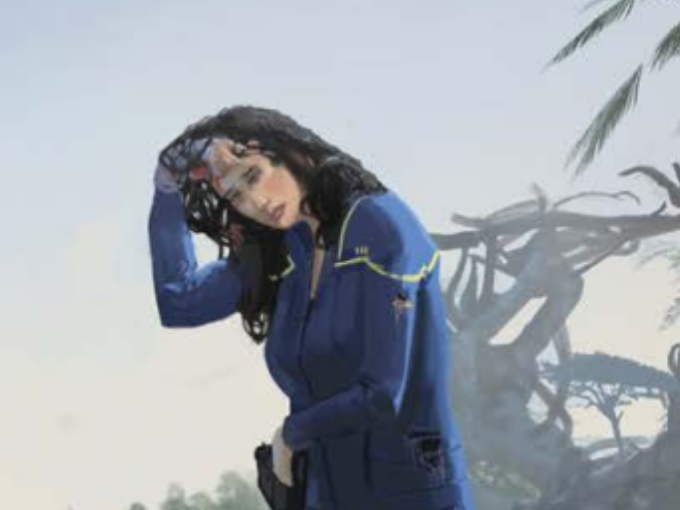
As I expect others will notice, I’ve included some examples here of artwork that appears to be… questionable. We reached out to Modiphius to clarify whether AI had been used in any of their source books, and they told us:
We don’t use AI in any of our products, art or writing
– Modiphius
This should hopefully put to bed concerns that others (like myself) may have had about its usage.

Conclusion
With the confirmation that the writing and artwork for the Star Trek Adventures 2E Exploration Guide have been made by humans, I think that this will end up being an essential resource in any game master’s collection. The written content in this book provides fantastic guardrails and guidelines for building your world. As well as useful ‘get out of jail free’ roll tables for a wide range of questions you may find asked of you by your players!
🔷 Purchase the Star Trek Adventures 2E Exploration Guide
Trek Central’s Star Trek Adventures 2E Exploration Guide Giveaway!More From Trek Central
📰 – Filming Starts for Star Trek: Strange New Worlds Season 4
🔥 – Christopher Pike – The Journey to Strange New Worlds Season 3
🔍️ – Star Trek Online Beams Down New Timeless Legacy Starship Bundle!
Join the Star Trek conversation via our social media platforms:
- Facebook – https://www.facebook.com/TrekCentral
- Patreon – https://www.patreon.com/TrekCentral
- Instagram – https://instagram.com/TrekCentral
- BlueSky – https://bsky.app/profile/trekcentral.net
- Twitter – https://twitter.com/TheTrekCentral
- YouTube – https://youtube.com/TheTrekCentral
- Mastodon – https://mastodon.social/@[email protected]
- Discord – https://discord.gg/fF2heMbfW8