
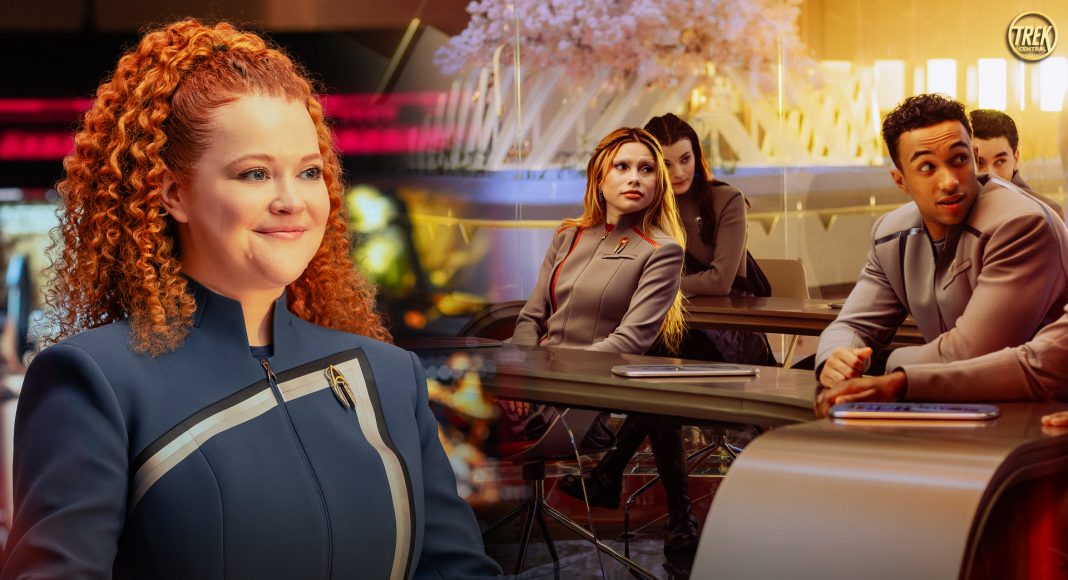

Another week, another episode of Star Trek: Starfleet Academy. This week’s edition is entitled “The Life of the Stars”, co-written by Jane Maggs and the series’ creator Gaia Violo. Like last week, it’s directed by Andi Armaganian. This week, Ake (Holly Hunter) calls in some reinforcements to help her cadets move past some recent emotional challenges. The Doctor (Robert Picardo) also shares the spotlight, grappling with the long-term effects of his own loss.
A new player for the well-established teaching faculty is no small order, nor is spotlighting a character that us fans already know very well. Can they juggle this well enough and still keep the focus on the titular Academy cadets? As you’ve probably seen through the episode, time is achingly finite. So let’s jump straight into our review for this week’s episode of Star Trek: Starfleet Academy.
WARNING – Spoiler discussion below for Star Trek: Starfleet Academy Season One Episode Eight “The Life of the Stars”
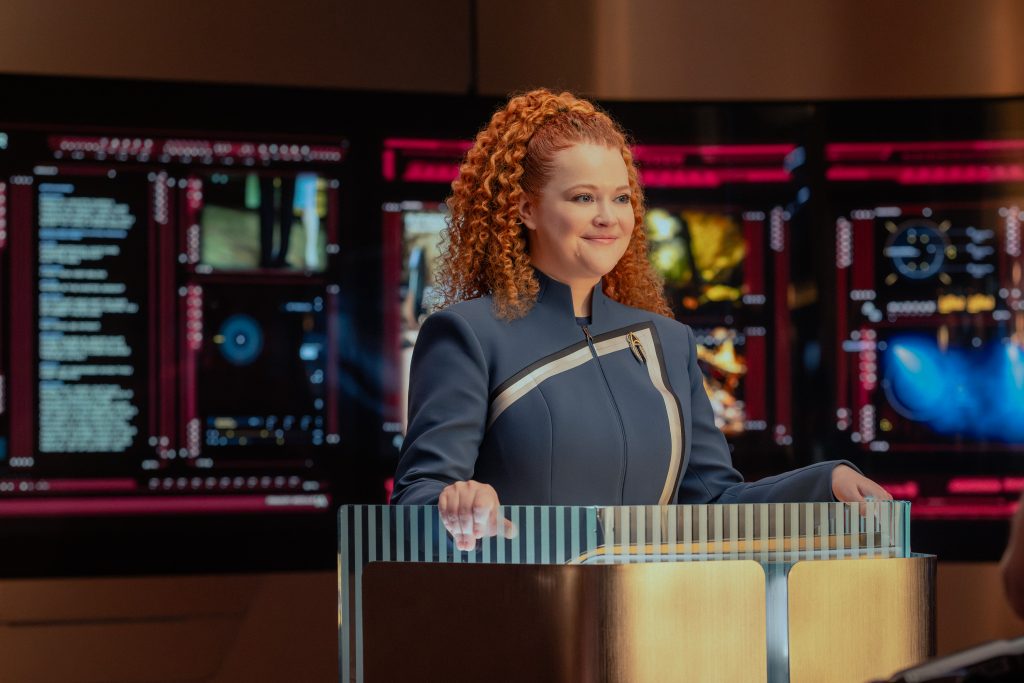
Theatre Class
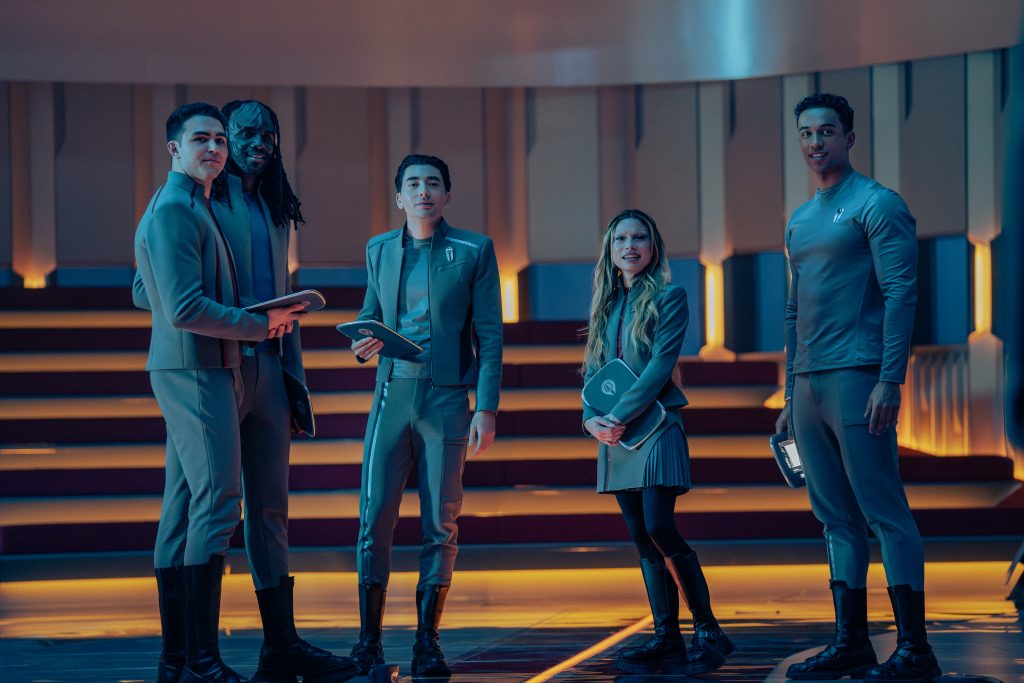
The episode opens in a way that makes the events of last week’s episode feel even more out of place. Much like the emotional beats from the end of “Come, Let’s Away“, the cadets are grieving. They’re dysfunctional, with relationships breaking down and bleeding into their bridge simulation training. Those grief counsellors they brought in aren’t working. Trying to give the cadets a hand, Ake calls in help from Sylvia Tilly (Mary Wiseman).
On one side, it’s nice to see Tilly. I enjoyed seeing her grow over Star Trek: Discovery, and her reunion with Reno (Tig Notaro), was really sweet. Anchoring her in as a drama teacher wasn’t something I necessarily saw coming. However, her infectious positivity and passion did summon images of stereotypical English Literature teachers. So, despite coming a little out of left field, it fits her character well. Wiseman does really well, too, stealing every scene she’s in.
Using theatre as an art to covertly grief counsel the cadets is inspired. On the one hand, there’s the emotional resilience and depth gained from engaging with a quality text. Whereas it also harkens back to the historical artistic pursuits of captains in series past. In engaging with a text like Thornton Wilder’s “Our Town”, they gain a wider perspective of themselves and the world around them. It’s a creative, if not immediately obvious, way to keep their education rooted in becoming better potential Starfleet officers.
Journey to Kasq
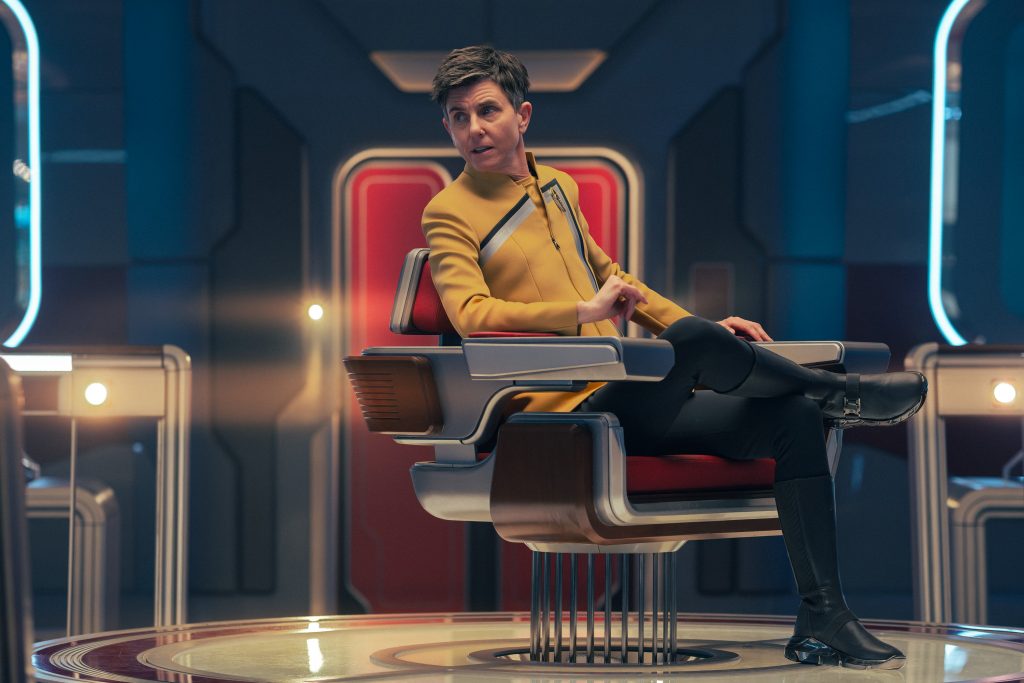
It’s not long into the group reading and performance exercises that Sam’s (Kerrice Brooks) glitches prove troublesome. A lingering physical injury, it’s far more visibly apparent than the emotional dysfunction the rest of the group is experiencing. With the Doctor unable to help her aboard the USS Athena, he takes her back to her homeworld of Kasq, accompanied by Ake.
The cinematography through all the Kasq sequences, from the actors’ blocking to the conservative use of colour, makes for memorable viewing. Just minutes after the discussion on moments only gaining colour after they become memories, infused with emotion and nostalgia, it’s effective. Living in the characters’ present moment, absent that colour, let the scene pop.
It also allowed for a more menacing presence from the returning Maker (Chiwetel Ejiofor), bursting into the frame with purples and blues. After a tense exchange about scanning Sam, they return bearing bad news. Overloaded and deactivated without a goodbye, the Doctor’s forced to grapple with her last moments of consciousness. His refusal to take her hand and comfort her was her last real impression of the world. It’s very deeply moving material.
Ghost Girl
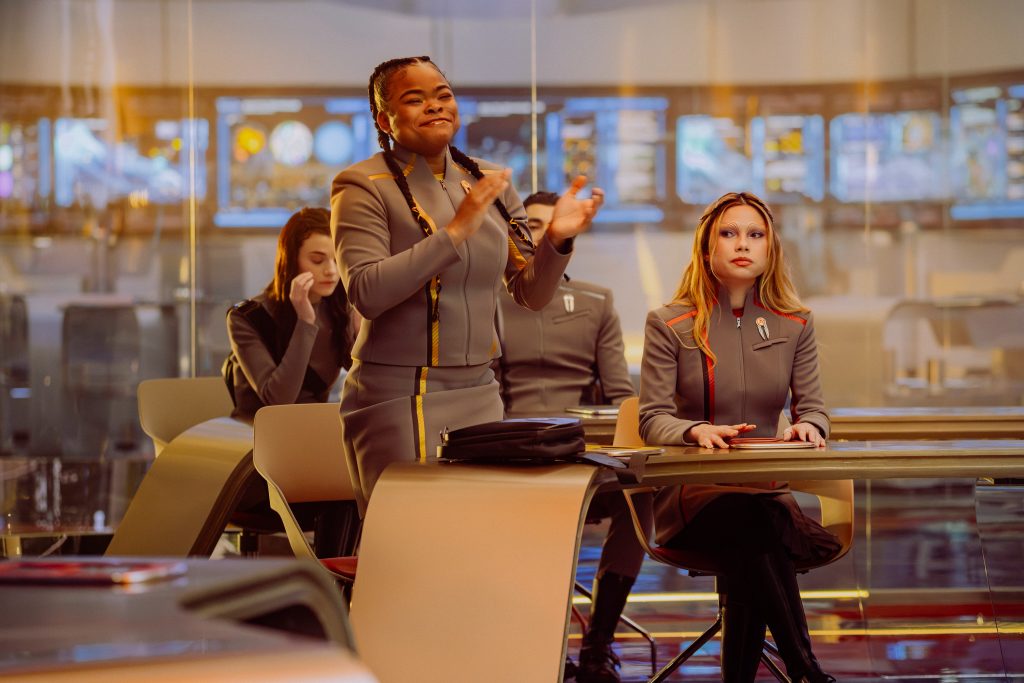
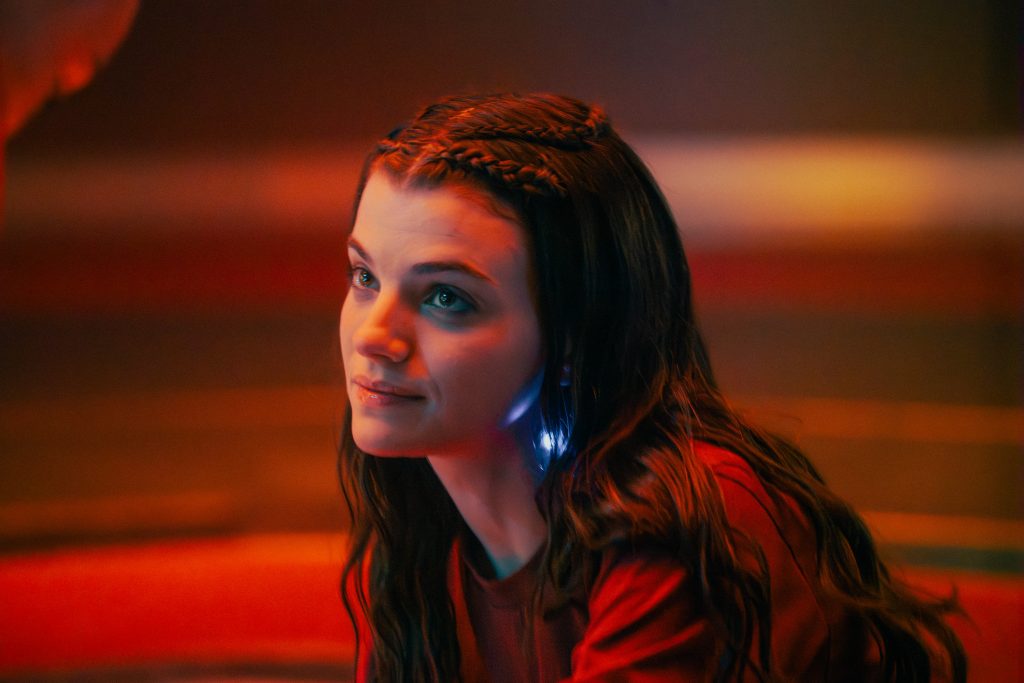
The material’s movement on Kasq is supported by the action taking place back at the Academy. The cadets are still studying the play in her memory, even though the absence of Sam’s enthusiasm is leading to disengagement from the material. Particularly, Tarima (Zoë Steiner) gets some more great material. Grappling with her enhanced inhibitor her forced transfer from the College to the Academy, and forced to play a character in the trenches of unhappiness, a ghost grappling with the precious nature of life.
It’s not hard to see how Tarima fits the bill of Emily’s character so well. Her life has changed; she can’t go back. How precious the days behind her were, gone in a flash. But unlike Emily, she’s not dead, yet she drunkenly withers away. Thankfully, Caleb (Sandro Rosta) understands consent, yet that doesn’t make the parade of social destruction any easier to watch. It’s the sort of emotional recovery story that makes me question last week’s tonal shift, with the series expertly lurching back into the darker sphere.
Through the play, and more importantly, her friends, she manages to find her own way out of this. She joins the cadets in that impromptu performance, with a bare set and absence of props, as Our Town is typically done. It’s a really moving ending to her story, demonstrating the power of art and the importance of social connection. A message of treasuring the present moment, in all its complex minutiae, rather than letting the good life pass you by.
Live Every Moment
Cutting back to the scenes on Kasq, the dynamic between Sam and the Doctor is interesting, with him presenting as someone who doesn’t want to be a mentor. Despite being a teacher at the Academy, Picardo manages to maintain the Doctor’s emotional distance from his surroundings, drowned in his signature wit. Giving him the spotlight and getting an image of what the last 700 years have been like through his detached eyes, makes sense this week in particular.
Invoking the events of Star Trek: Voyager‘s “Real Life” to explain why it would’ve felt out of place anywhere else. Here, however, it expands on the episode’s meditation on mortality and emotional resilience. Literally implanting resilience and a childhood into Sam, thanks to Kasq’s time dilation, may be a little over the top. Yet there’s something about seeing Picardo let loose that helps to tie everything together nicely enough.
Just weeks later, we see Sam refreshed and welcomed back by her mature classmates with open arms. For Tilly, it’s just another mission accomplished. Yet for everyone else, particularly the Doctor and Tarima, it feels like a rebirth. It ends with a call to live every moment, with the colour pulling out of frame. Eventually, the lingering grayscale spotlight on Hunter’s Ake switches off, ending the episode. A beautiful shot, a resonant message, and the end of a moving episode of the series.
Conclusion
“The Life of the Stars” is a beautiful meditation on the fleeting nature of life. In seeking the importance of savouring every moment, it crafts a very moving episode of television. Beyond the inherently sad nature of ideas like grief and mortality, the episode’s textual conversation with Wilder made me feel like I was sitting in an English class again. The episode is running through dark emotional trenches here, and the series is all the better for it.
Anchored by guest star Mary Wiseman’s teacher and Robert Picardo’s acting masterclass on grief, the cadets grapple with what it means to appreciate being alive. I’m not ashamed to admit I cried a bit. The episode ends with Ake remarking that time is both forever and achingly finite, and what a shame it would be to not live every moment. There’s no other way I’d have rather lived tonight than watching this; it’s an emotionally moving masterpiece.
More From Trek Central
🔥 – Returning CEO of Cryptic Studios Talks Future of Star Trek Online!
📰 – REVIEW – Star Trek: Starfleet Academy “Come, Let’s Away”
🔎️ – Everything We Know About Star Trek: Across the Unknown
Join the Star Trek conversation via our social media platforms:
- Facebook – https://www.facebook.com/TrekCentral
- Patreon – https://www.patreon.com/TrekCentral
- Instagram – https://instagram.com/TrekCentral
- BlueSky – https://bsky.app/profile/trekcentral.net
- Twitter – https://twitter.com/TheTrekCentral
- YouTube – https://youtube.com/TheTrekCentral
- Mastodon – https://mastodon.social/@[email protected]
- Discord – https://discord.gg/fF2heMbfW8