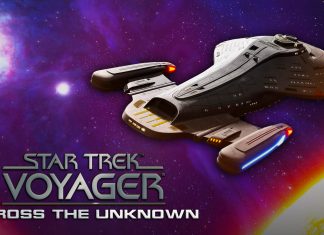


25 years ago, today. On September 15th. Star Trek: Voyager – Elite Force was released in Europe. The North American release was a week later, on the 20th. Developed by Raven Software, it was built on the id Tech 3 (Quake III Arena) engine. This wasn’t just a great choice because Elite Force is a first-person shooter. The Quake III engine lends itself to modding, and the modding community for the game is still active today. However, it was much less active than at its peak in the decade following the game’s release.
Some consider Elite Force the first Star Trek game to achieve mainstream appeal among gamers. A belief that I think is backed by the game’s long-term appeal both within the fan base and outside of it. One only needs to compare it to Star Trek: Deep Space Nine – The Fallen, released in the same year. A game that is all but forgotten even within the fandom, despite being great fun to play through back when it was released.
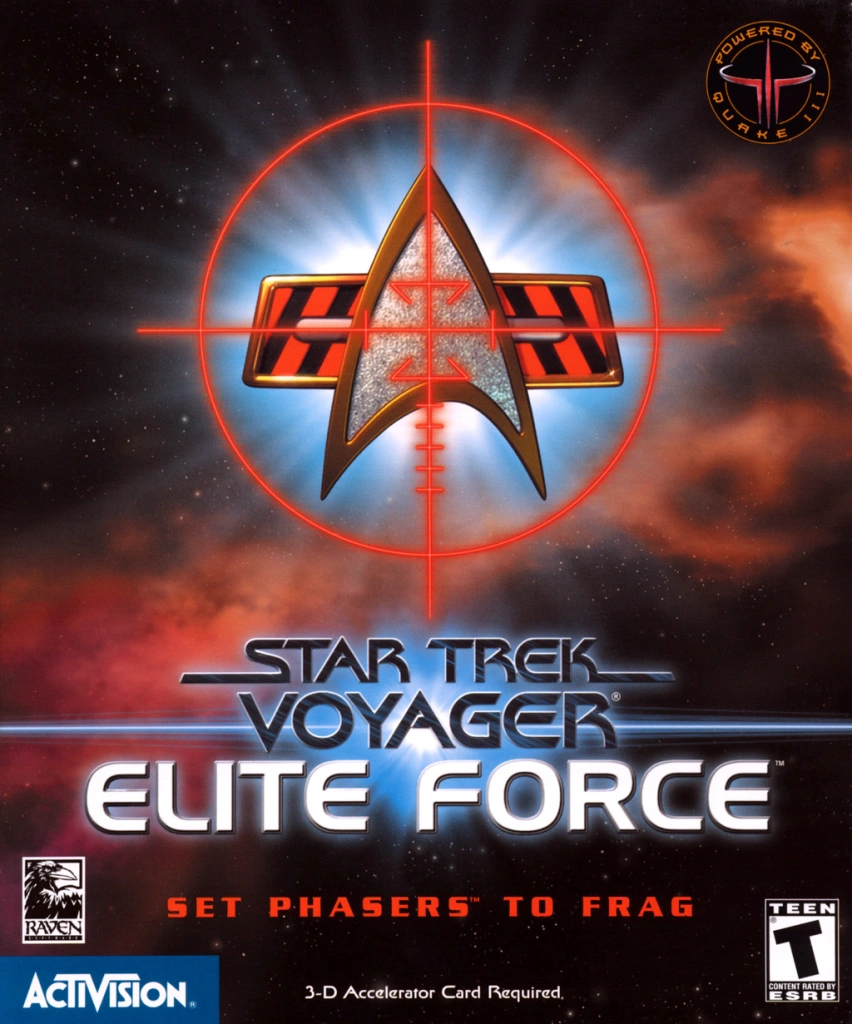

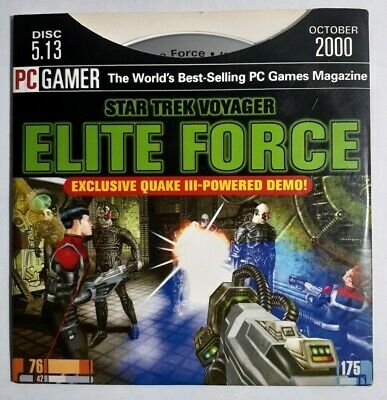
Set Phasers to Frag
It’s challenging to pinpoint the success of the game to a single factor. But even playing it today, it’s clear that Raven Software had a genuine passion and interest in Star Trek as a franchise and Voyager as a show, beyond the contractual obligation. At the same time, other Trek games from the era (especially those published by Activision) are similarly beloved. The likes of Star Trek: Armada, Starfleet Command and Bridge Commander put you into more of a Sandbox, where you interact with known characters (usually Picard), rather than making you feel as though you’re playing through an interactive episode in the way that Elite Force does.
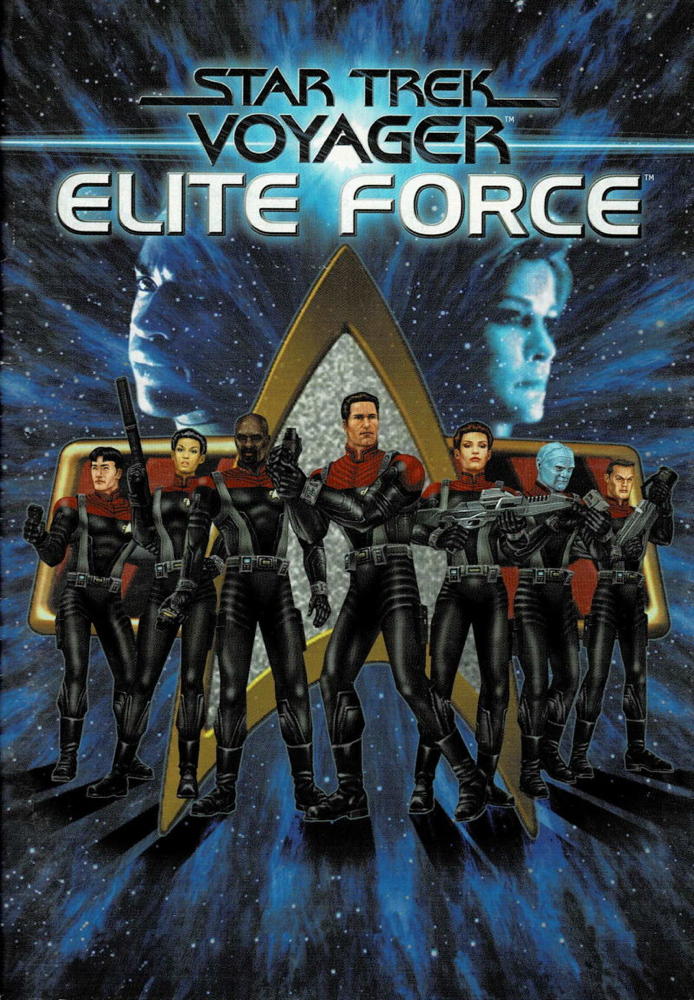
A big part of this I think is down to the fact that Elite Force actually had the whole Voyager cast onboard (well, minus Jeri Ryan until the expansion pack). You didn’t have Picard or Data visit your ship, or join your fleet. In Elite Force, you’re a member of the Voyager crew, and the cast of the show are your superior officers and crewmates.
Even amongst the ‘Hazard Team’, you have characters like Chell and Jurot who were introduced in the show and alongside new crew members created for the game, like your character, Munro. Or the admittedly quite annoying Biessman.
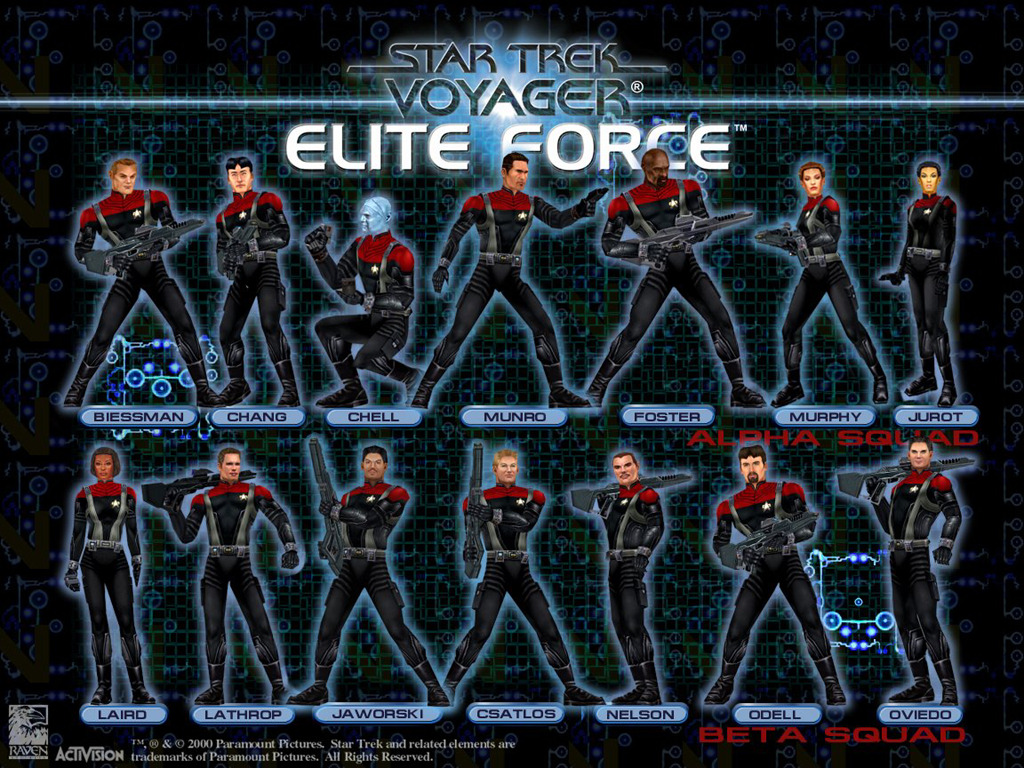
” Hazard Team “
Adding to the game’s success was the fact that it wasn’t entirely on rails. While the extent to which the player could impact the story pales compared to say, Mass Effect. Like Mass Effect, you could choose the gender of your character, Munro (Alexander, or Alexandria, respectively). Which didn’t actually change the narrative in any way, but was a new concept for Trek games.
During the story, you can also influence the narrative in a few minor ways. Early in the game, you can save a crewman from a power overload. Then, later in the game, you can save the Hazard Team Leader, Lt Foster, from assimilation if you move quickly enough to dispatch his Borg captors before they move him.
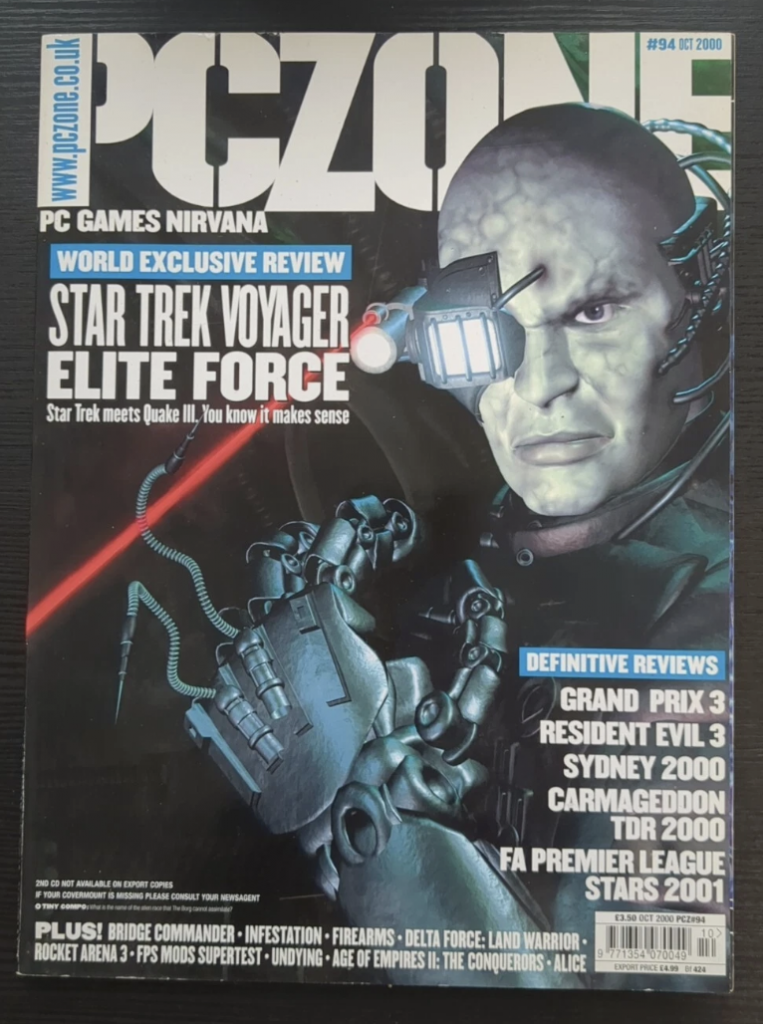
The story’s plot shares several parallels with Voyager’s season 7 episode ‘The Void’. Also establishes a setting which allows species from throughout Voyagers run, along with other iconic Trek antagonists, to make an appearance. Throughout the game, you face off against the Hirogen, Malon, Borg, Species 8472 and even some humans from the Mirror Universe!
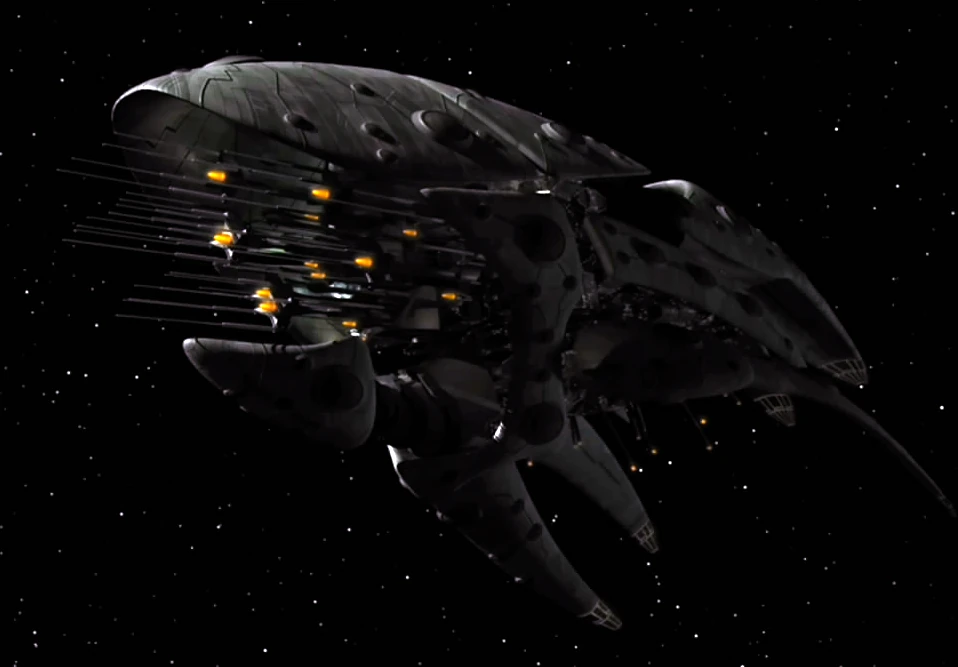
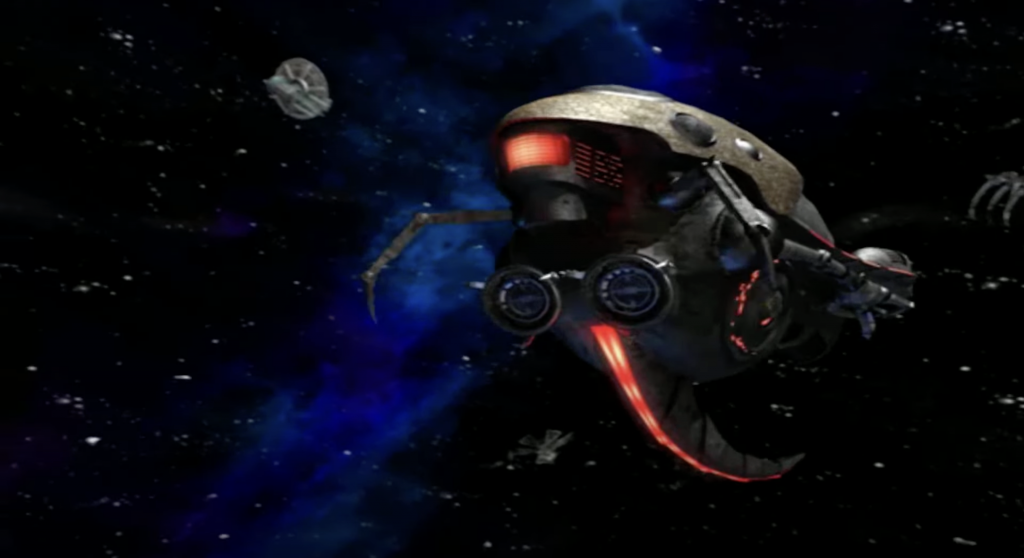
As you progress, it’s revealed that the new enemy (the Harvesters) has been dismantling vessels from many species. As a part of the overarching scheme of the game’s main antagonist, the Vohrsoth. Who happens to use ships that share a resemblance with a derelict seen in Voyagers Season 5 episode ‘The Fight’. That later became the Romulan Drone ship…
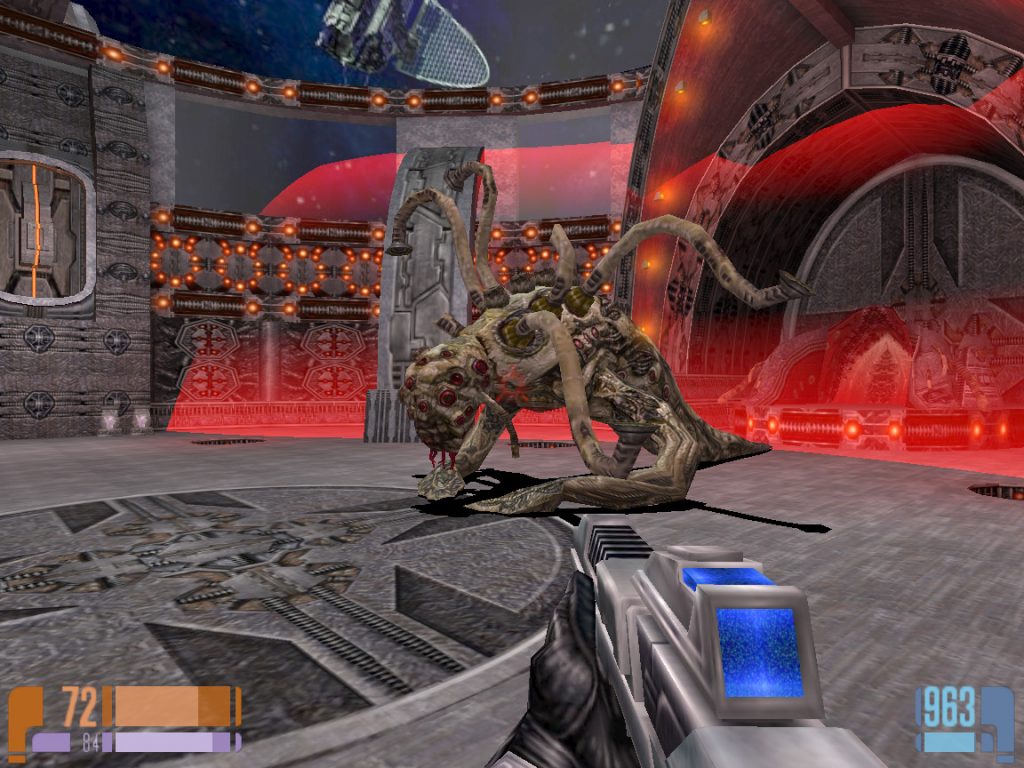
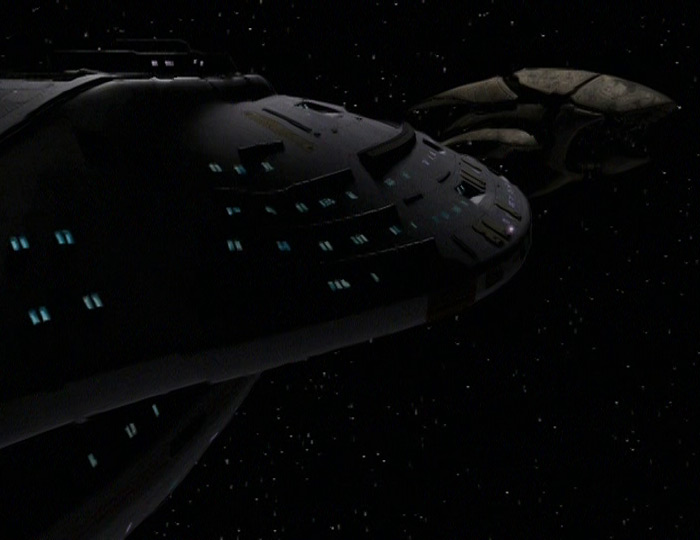
Expansion Pack
With all of that said. The (in this humble Voyager fan’s opinion) superb campaign of the game is only one part of the overall package. It’s not even the only single-player option, as long as you have the expansion pack.
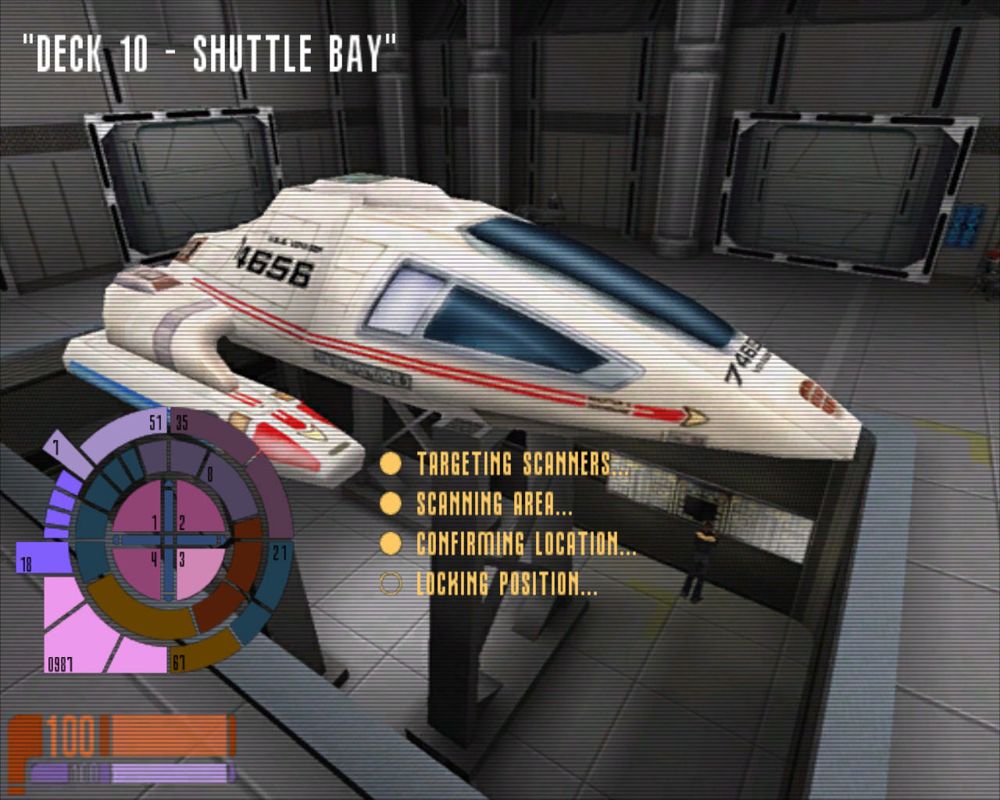
Said expansion pack, released after the PS2 version of the game (sorry console gamers) added Jeri Ryan’s voice for Seven of Nine (replacing Joan Buddenhagen), some more multiplayer maps and most importantly: A Virtual Voyager mode. I attribute a lot of my own personal fondness for Voyager to this mode. At the same time, TNG and DS9 had blueprints and tech manuals released that covered the overall layout of their setting. They never imbued me with the confidence to think I could be on the Enterprise, or DS9 tomorrow and instinctually know my way around.
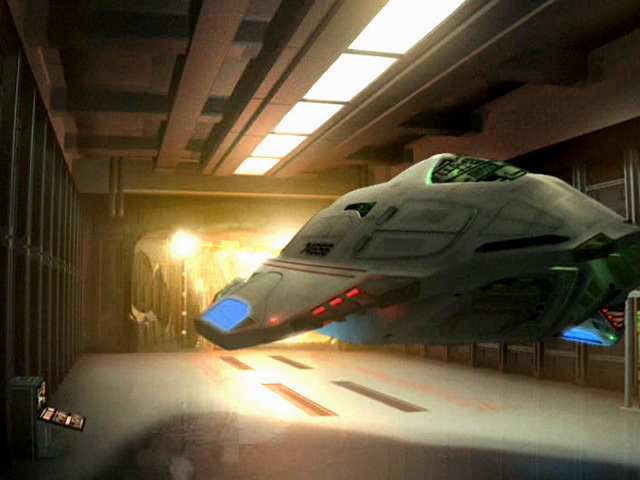
Virtual Voyager did. Now of course, it was an additional game mode. So I would have been completely and utterly wrong if I had found myself on a real life Voyager. The overall layout wasn’t even the biggest sin committed by the virtual version. That would be their mix up of the Shuttlebay and the Cargo Bay where the Delta Flyer was built. But it’s probably a good idea not to focus on Voyager and its shuttle bays too much. So lets move on…

Virtual Voyager
Even for a die hard Voyager fan such as myself, just being able to walk around the corridors of Voyager would have eventually gotten old. Fortunately, plenty of interactivity and fun easter eggs were built into the mode. Now of course, you can just pick up a phaser, shoot somebody (yes, including Neelix) and be chased over the ship until you’re eventually ‘killed’ and put in the Brig. Where you get a Voyager crew member visit you to tell you how disappointed they are in you.
But if you just do that, you’ll miss out on being able to collect the figures on each deck of the Hazard team. Being able to activate the self destruct, deactivate the warp core. Even launch a shuttle. There’s even a hidden third person ‘borg slayer’ mini game.
But like Reg Barclay, my favourite place is the holodeck. Where you can run a range of simulations. Killing a bunch of monsters in a garden, shooting targets at the shooting range , infiltrate a Klingon compound. Or my personal favourite. Taking on the role of Captain Proton (you can even find his Ray Gun in Paris’ quarters) to fight against the evil schemes of Dr. Chaotica!
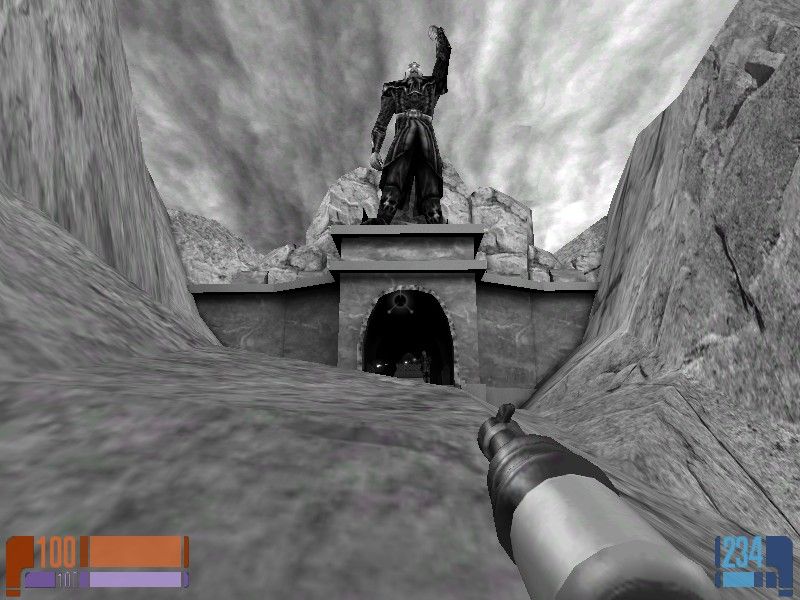
Beyond The Base Game
Voyager Elite Force also had (has) a multiplayer mode called Holomatch. Featuring all the first-person staples such as Capture the Flag and Deathmatch/Team Deathmatch alongside some Trek-themed variations on other popular game types, such as ‘Assimilation’ where a Borg team has to assimilate a Starfleet team.
But the real success of Voyager Elite Force’s online presence didn’t lie in its ‘shoot em up’ game modes. After its launch, the game quickly became a popular tool among fans for running live role-playing sessions. Elite Force, with its range of character models, weapons and modding tools, proved a fertile ground for Trek fans who were keen for something a bit more interactive than a tabletop. One of the most popular (and still in use to this day) mods was RPG-X. The first was released a few years after the Expansion pack.
Development continued on RPG-X for over a decade. Culminating in an ‘Ultimate Edition’ release where the developers gained permission from CBS and Raven Software to release a version of Holomatch which didn’t require the base game. Opening it up to Star Trek fans who hadn’t thought to pick up a copy of Elite Force between 2000 and 2003 when they were on store shelves. Of course, today, if you can grab Elite Force directly from GoG.
RPG-X
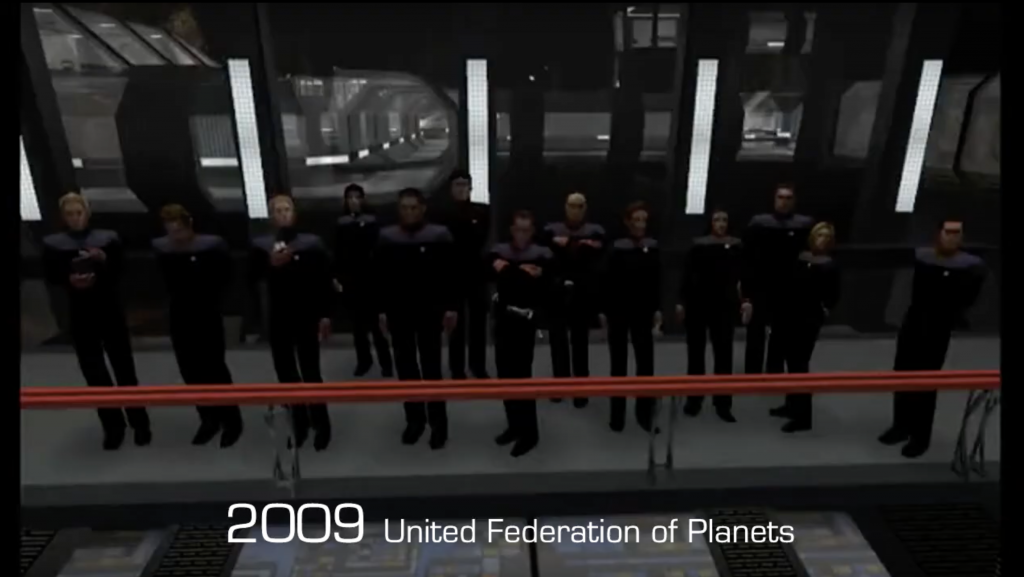
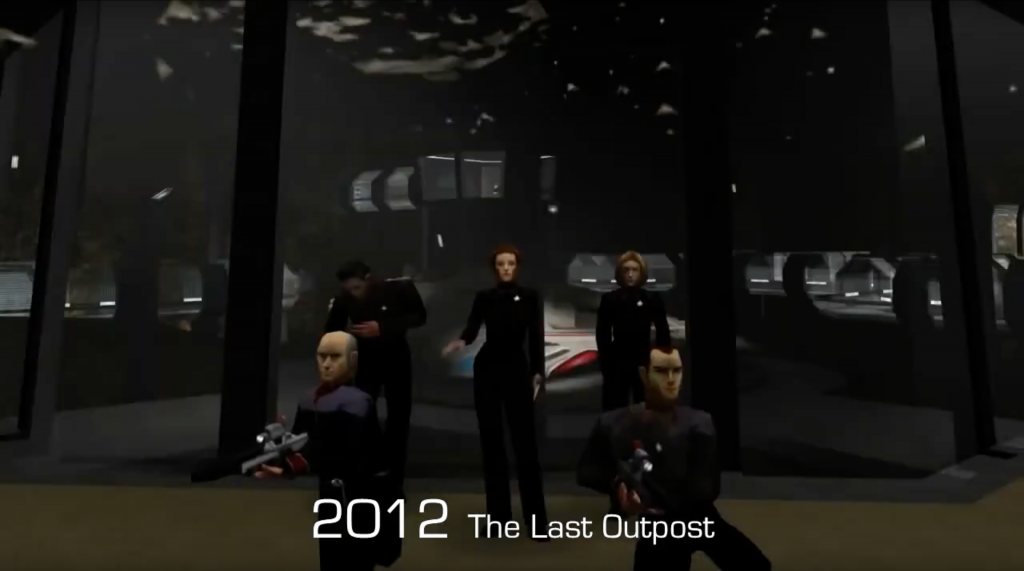
I was part of the RPG-X community for several years and have many fond memories associated with that time. I created some of my own additions to the mod (such as the damaged uniforms, designed for a short-lived mini-series called Star Trek: Allegiance), co-created and devised plots for other, more successful role-play series. Such as Asteroid Base, and took part in many more (such as the Asteroid Base sequel, Asteroid Field).
How much the Mod adds to the game really has to be seen to be believed. There is a vast selection of maps, each one built to a higher level of detail than the original virtual Voyager, with significantly more interactivity as well. You also have a much larger selection of character models and uniforms. With those I added being just one in a long list, allowing you to create stories in, or have crossovers with any era of Trek.
Some tools come with the mod. When you join a session, you select a division and receive a selection of equipment appropriate to that division. Though you can still pick up other items in the maps as the story requires! However, it also gives admins the ability to play music from their own playlists, spawn in effects, and ship models and NPCs to fill the background, making the setting feel more alive. It’s a true testament to the success of the mod that as recently as last year, a new version of the original Asteroid Base roleplay map was released on Nexus Mods.
Quarter of a Century on
Today, the golden age of Star Trek: Voyager – Elite Force is long behind us, despite the game still having several passionate advocates (including myself). The community that once kept the game alive has mostly moved on to other things, whether due to real-life commitments or a desire for a change of pace and exploring more current roleplay experiences, such as Star Trek: Adventures or Star Trek: Online.
But it’s never been easier to pick up your own copy, since Activision and GoG paired up to re-release the game (along with Activision’s other published Trek titles) back in 2001 for the franchise’s 55th Anniversary. So who knows, maybe this anniversary of Elite Force itself might see the game come back to life…
Star Trek: Voyager – Elite Force is currently available on GoG
You can download RPG-X via moddb or directly from The Last Outpost
More From Trek Central
📰 – Review – Strange New Worlds: Season 3 Episode 9 ‘Terrarium‘
🔥 – In Conversation – Star Trek’s Navia & Picardo
🔎️ – Review – Star Trek: Voyager ‘Homecoming’
Join the Star Trek conversation via our social media platforms:
- Facebook – https://www.facebook.com/TrekCentral
- Patreon – https://www.patreon.com/TrekCentral
- Instagram – https://instagram.com/TrekCentral
- BlueSky – https://bsky.app/profile/trekcentral.net
- Twitter – https://twitter.com/TheTrekCentral
- YouTube – https://youtube.com/TheTrekCentral
- Mastodon – https://mastodon.social/@[email protected]
- Discord – https://discord.gg/fF2heMbfW8